
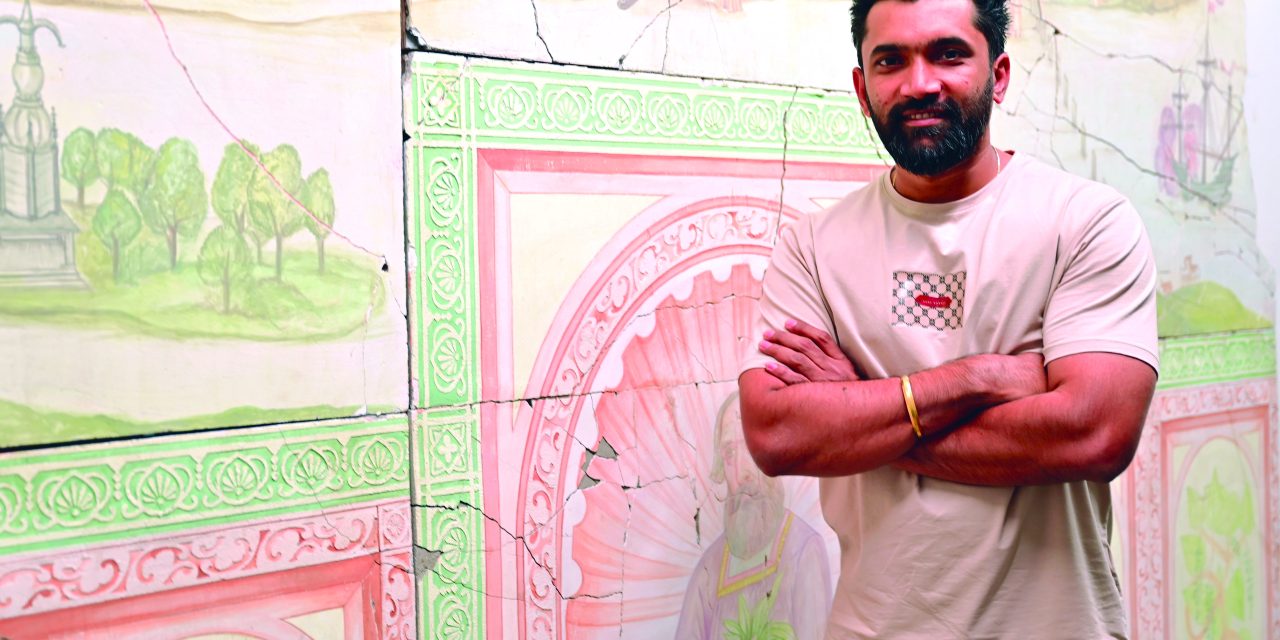
‘Not a Shore, neither a ship, but the sea itself’ at the ongoing Serendipity Arts Festival explores the Indian Ocean’s history and culture through works by 16 artists
RAMANDEEP KAUR | NT KURIOCITY
What if the sea could tell its own stories, not just as a backdrop but as a record of trade, migration and memory? That is the idea behind the exhibition ‘Not a Shore, neither a ship, but the sea itself’, which is part of the ongoing Serendipity Arts Festival.
The exhibition has works by 16 artists including Afrah Shafiq, Balraj Khanna, Gaurang Naik, Jovita Alvares, Karishma D’Souza, Krishna Reddy, Madhurjya Dey, Monika Correa, Muhanned Cader, Nataraj Sharma, Pritish Naik, Ryan Abreu, Shivanjani Lal, Simryn Gill, Viraj Naik, and Walter D’Souza.
“The title focuses on the sea itself, rather than land or ownership,” says Sahil Naik, who is the youngest curator at SAF. “It is fluid, connected, and constantly changing, just like the histories we are showing in this exhibition.”
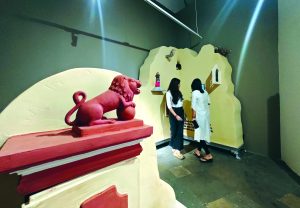
He further says that the Indian Ocean is portrayed as a cultural and historical network, not just a map. “The works refer to trade routes, colonial encounters, religious exchanges, migrations and ecological links across Goa, the Malabar coast, Africa, Southeast Asia, and beyond.”
The exhibition is research-based and inter-generational, using archives, oral histories, fieldwork and the curator’s own experiences of moving from Goa to Baroda for studies. “It shows how movement between places and artistic traditions shapes ideas, influence, and belonging,” he explains.
The works displayed at the exhibition include painting, printmaking, photography, sculpture, video, installation and mixed media. Materials range from woodcuts, pigments, paper and textiles to found objects, archival images and digital media.
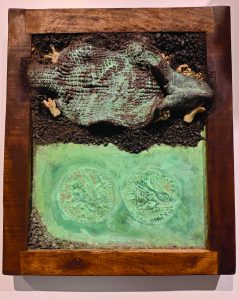
As a curator, Naik says, his job was to bring the works together and let each story speak for itself. In fact, the artists were chosen for their work on movement, memory, colonial history, maritime geography, and cultural exchange. “Even though they use different styles and media, their works show a strong connection to place, history and the forces that shape life,” says Naik, adding that the exhibition tells how Goa has long been a crossroads for people, ideas, and goods.
The show also acknowledges the impact of senior Goan artists such as Nataraj Sharma, Walter D’Souza and Karishma D’Souza, whose long careers have influenced younger generations. Naik says many young artists view them as mentors and as examples of how to stay connected to Goa while engaging with the wider artistic world. “Goa’s printmaking tradition is another important thread, shown through works by Krishna Reddy, whose influence continues today,” he adds.
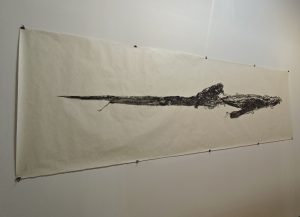
Some artists come from other parts of the Indian Ocean. Naik says, “Their work does not focus on Goa but shares common histories. Shivanjani Lal from Fiji and Muhannad Cader from Sri Lanka explore migration, memory and colonial legacies.”
(‘Not a shore, neither a ship, but the sea itself’ will be on display until December 21 at the Old GMC Complex, Ground Floor, from 11 a.m. to 7 p.m.)
PICS BY HEMANT PARAB





Recent Comments