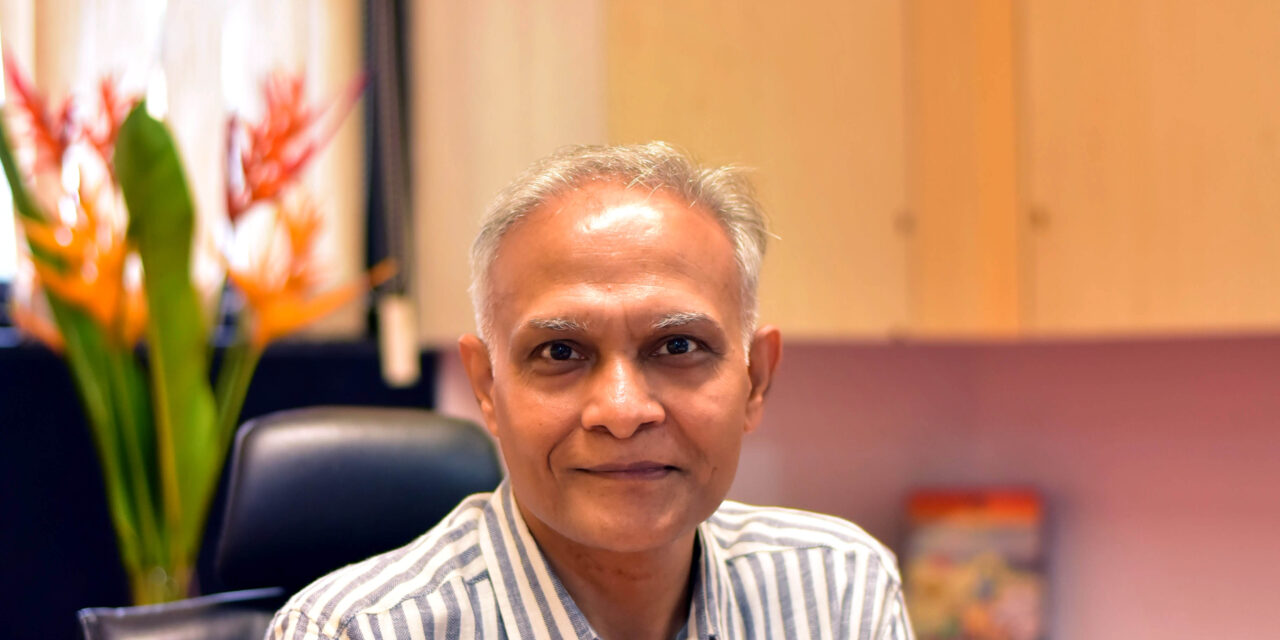
Veteran diplomat and UPSC member Sanjay Verma IFS (Retd.) sheds light on civil service, career paths, and staying relevant in a changing world
ADITHI SHARMA | NT KURIOCITY
Every August, People’s High School, Panaji, hosts a career talk series for students of Classes 9 to 12. This year’s edition, ‘What Are My Choices?’, featured as per usual, professionals from fields ranging from the arts to public service. From the academic field, UPSC member ambassador Sanjay Verma, IFS (Retd.) was the speaker. A distinguished diplomat, Verma served India for 34 years in various positions across multiple continents.
Excerpts from the interview:
What makes a candidate excel in the UPSC written exam and interview?
Clarity in communication is key. It comes from clear thinking, which comes from being well-read and analytical. It’s about how you apply the facts available to you. Candidates should approach the syllabus with a broad, real-world perspective, not tunnel vision. Those who connect theory with current events stand out, rather than relying only on outdated textbooks. This applies across subjects like economics, sociology, political science, and science.
The UPSC landscape has changed since I appeared for it in 1990. Today more candidates compete, aided by digital resources, but there are also more distractions. Candidates who can stay focused and avoid distractions have a clear advantage.
There have also been structural changes. Earlier, there were optional subjects in both prelims and mains. Now, there are none in prelims and only one in mains, with general studies carrying more weightage. The focus is now on broad, generalist knowledge.
Another observation is the continued underrepresentation of Goans in the civil services, which is a matter of reflection.
With the growing focus on general studies and open knowledge sources, doesn’t the UPSC syllabus feel too vast?
It may feel vast from a student’s perspective, but I wouldn’t call it so. Nation-building demands individuals with wide-ranging knowledge. And considering the complexity of India’s challenges, no syllabus can ever be too broad. If anything, it should go further.
What would you say to Goan students who feel overwhelmed by the volume of information?
Goa is unique in the Indian context, with strong socio-economic indicators and several quality educational institutions. However, civil service participation continues to be low and largely unchanged. Perhaps the relative comfort here lessens the urgency seen in other states.
Take Kerala, for example, a state with similar advantages but far greater UPSC participation. It would make for an interesting academic study to understand why some states produce more aspirants than others.
My advice is that students should not be discouraged by the amount of information. Staying curious and engaged will help build confidence.
With technology, online resources, and career guidance becoming increasingly prevalent, how should aspirants approach and structure their preparation in the age of AI?
This is not just a question for students or UPSC aspirants; it applies to everyone. We all need to consider how we engage with AI and the role it will play in our lives.
Instead of resisting it, we must adapt. The term Luddite refers to those who reject technology out of fear that it threatens their current position. But resisting change only leads to being left behind.
Whether you’re a student, teacher, businessperson, or civil service aspirant, the goal is to adopt AI in ways that support your growth. Interestingly, many universities are already restructuring their syllabi with the UPSC framework, which shows how institutions are evolving with the times.
You spoke to students at People’s High School about building their options. What foundational knowledge or habits should they start developing now?
Curiosity, followed by the willingness to explore and learn. Take an interest in the world around you. Even if you don’t join the bureaucracy, understanding how the government and public service function is important. In any field, you may interact with these systems, whether to collaborate, critique or suggest improvements. But that’s only possible if you understand how they work. Everyone should also have a basic understanding of the Constitution. It is the country’s playbook. Without knowing what it says, how can you be an informed citizen?
Beyond academics, students should pursue creative or physical activities like theatre, music, art or sport. These help develop a well-rounded personality. At the national level, your peers will not just be academically strong. They will have broader interests too. A genuine hobby can set you apart and parents should support these pursuits. They are not distractions; they are vital for balanced growth.
How has the role of women in the civil services evolved?
Women’s presence in the civil services has grown steadily. When I joined the foreign service in 1990, my batch had no women, an exception in its time. In the history of Indian Foreign Service, 1990 is the only batch without women. Even in those days, I think it used to be 10-15% women. Today, women make up about 35–40% of new entrants in the IFS. In the IAS, around 33–35% of joint secretary-level posts in Delhi are held by women. I recently learned that In Tamil Nadu, nine out of 10 districts were headed by women collectors.
Most top roles in government have now been held by women but we should aim for equal representation. In some European countries, women already form the majority in diplomatic services. I’ve hosted several all-women delegations from Europe, while our side had only one or two women.
Given your position on the UPSC board, are there any upcoming changes you foresee that haven’t happened in the past?
The UPSC will enter its 100th year this October. It was originally called the Public Service Commission until 1950, when it was renamed the Union Public Service Commission after India became independent. It’s a long-standing institution known for meritocracy, transparency and fairness. These principles guide everything we do.
What’s changing is the increased use of technology across various processes. Security measures related to investigation, assessment, and scrutiny have also been strengthened. The goal is to carry out our responsibilities in a more efficient and contemporary manner while preserving the Commission’s dignity and reputation.
Lastly, can you share a moment in your service when you felt you had made the right decision by choosing this career?
From my first day to the last, every day over 34 years, I felt I had made the right choice. I never once regretted becoming a diplomat, whether I was posted in Delhi or abroad, in conflict zones or peaceful regions, attending UN conferences, negotiating trade deals, engaging in cultural exchanges or managing high-level visits as chief of protocol. Everyday!