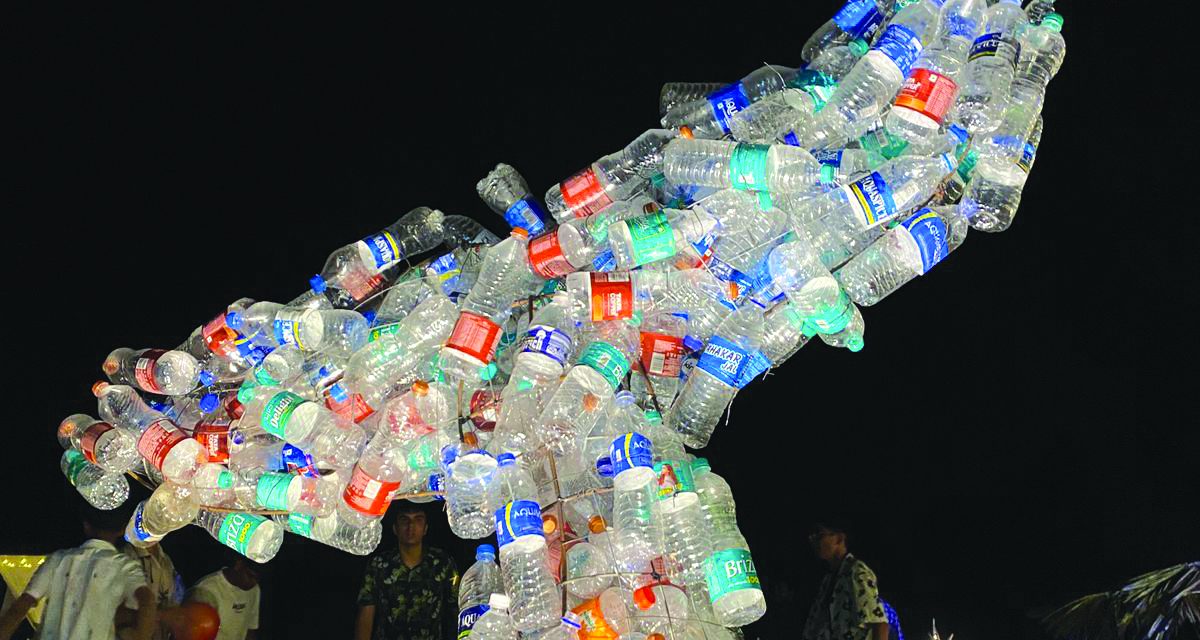
A wave-and-whale-tail sculpture built from 600 plastic bottles now doubles as a waste bin at Calangute beach
RAMANDEEP KAUR | NT KURIOCITY
Goa’s beaches attract visitors for leisure, but they also bear the mark of human impact: visible plastic litter scattered across the sand. At Calangute, the discarded bottles have been assembled into a sculptural installation.
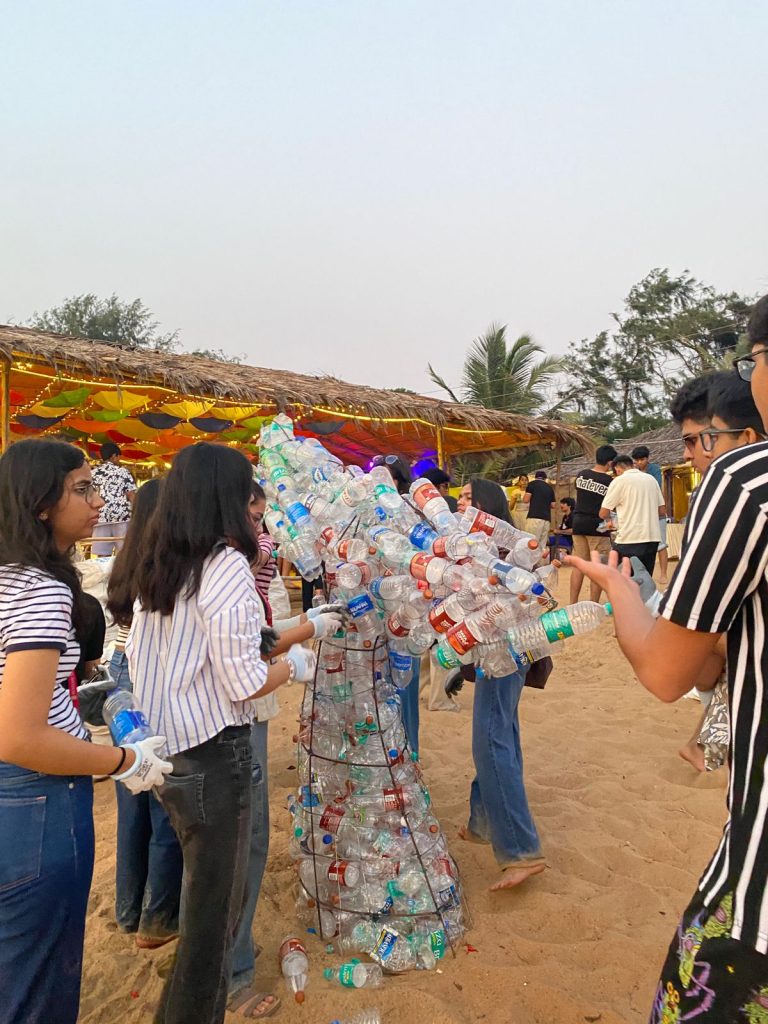
The project was created by Socorro-based architect Evanthika Pereira in collaboration with Happy Miles, with students from a private school in Gurugram participating in the hands-on work.
The exercise was designed to engage students from Classes 8 to 11 with ocean pollution and the hidden impacts of tourism on coastal areas. “Tourists mostly see the beach, the architecture and places of leisure,” explains Pereira. “The other side of tourism is often overlooked. Plastic being disposed of everywhere is becoming a serious problem in the state.”
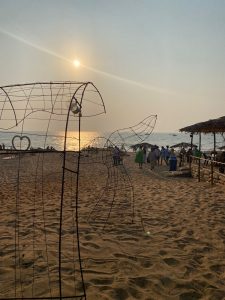
Happy Miles, which specialises in experiential learning through travel, helped turn the visit into a practical learning experience. “The students didn’t just observe; they helped organise, coordinate, and take part in the work on the beach,” says Pereira.
Over a week, about 600 plastic bottles were collected from the beach and nearby restaurants. The sculpture also doubles as a prototype for a garbage bin. “We didn’t use any new materials. Everything came from the beach itself,” explains Pereira. “Using real discarded bottles makes the sculpture both an artwork and a reflection of the waste around us.”
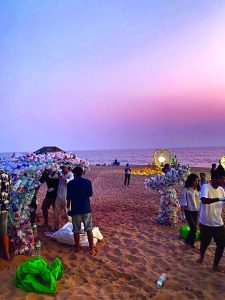
The installation is shaped like a massive wave, with a whale’s tail rising from it. “The wave gives a sense of movement, while the tail becomes a visual focal point,” Pereira says. “It’s meant to show how water and marine life are being replaced by plastic.”
To withstand coastal conditions, the structure is mounted on a custom aluminium frame. “Aluminium keeps it lightweight, weather-resistant and stable, while binding wire secures the bottles with minimal impact,” she explains.
The sculpture has caught the attention of students and visitors alike. “Many students said that seeing the waste in this form made the issue feel immediate. Visitors stopped to take photos, ask questions and engage with the work. Some even said they felt guilty in a good way because they recognised bottles similar to the ones they use daily,” she says.
Pereira hopes the installation makes people think about how they use single-use plastics. “If even a few people change their habits because of it, then the work has served its purpose.”