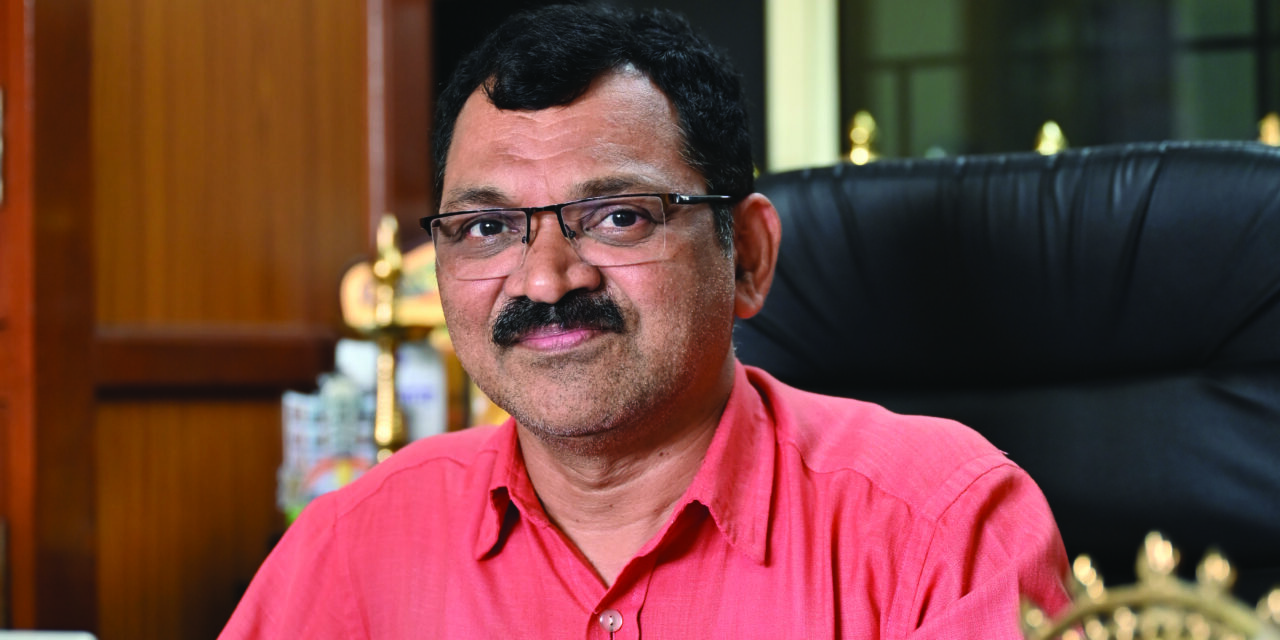
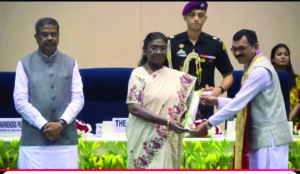
Headmaster of Dr. K. B. Hedgewar High School, Cujira, Vilas Ramnath Satarkar, who was recently honoured with the National Teacher Award 2025, reflects on three decades of transformative education
RAMANDEEP KAUR | NT KURIOCITY
Over nearly 30 years, Satarkar has transformed a small school with just 27 students into an institution known for academic excellence, innovation, and overall student development.
Dr. K. B. Hedgewar High School began as a primary institution near Shree Mahalaxmi Temple before moving to Mala, where it functioned as a high school. When Satarkar began teaching there in 1996, he initially handled Class 5 mathematics. He says he chose teaching partly because of his early involvement with a student organisation. “When I first joined, the school had very few students and we had to personally visit families to encourage enrolment,” he recalls.
In 2002, he became the headmaster. One of the most important moments in his career came from visiting students’ homes. He remembers that parents and children treated him with respect and gratitude. “Parents would tell their children to take my blessings. The trust and respect from parents inspired me to give my best,” he says.
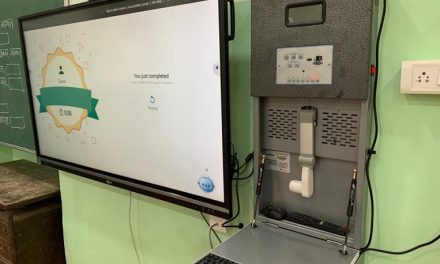
In 2014, the school was upgraded to higher secondary. In Mala, classes were initially conducted in 20 shutters of a commercial complex in a low-lying area prone to flooding, which often disrupted lessons. Despite these challenges, Satarkar and his team ensured students excelled academically. Today, the school, which is now located in Cujira since 2015 has three divisions per class, full admissions, modern labs, a library, smart classrooms and a range of extracurricular programmes.
Satarkar introduced several initiatives to make learning practical and engaging. Activity-based learning, field trips, hands-on projects and mentorship programmes are part of the school’s routine. In 2017, the school launched an Atal Tinkering Lab, where students develop projects under guidance from experts, including retired professionals. Some of these projects have been showcased internationally, in countries like Russia and Singapore. “We encourage students to share their ideas and with guidance, they can turn them into real projects. This helps them think creatively and solve problems,” he explains.
The school also emphasises sustainability and social responsibility. Solar energy, rainwater harvesting, and reduced plastic use are part of the daily routine. Students use steel cups and plates during events and distribute homemade treats instead of packaged sweets during celebrations. Blood donation drives, cyber competitions and inter-school patriotic events help students connect with society. Many facilities, such as computer labs and smart classrooms, were built with support from corporate social responsibility (CSR) programs.
Satarkar’s approach to teaching goes beyond academics. He emphasises discipline, empathy, and civic responsibility. “When students are disciplined, other qualities like responsibility and empathy follow naturally,” he says, adding that the school celebrates student achievements collectively with teachers and parents. “This shared success motivates the entire school community,” he says.
Inclusivity is another priority. The school supports students with special learning needs, including slow learners and autistic children, with the help of specially trained teachers. “These teachers continue to guide students even after they graduate and help them with higher education and career decisions. This ensures that all students, regardless of ability, can succeed and contribute to society,” he adds.
And adapting to modern challenges has been important, he says, especially after COVID-19, when many students became more dependent on smartphones. Satarkar acknowledges that technology is part of students’ lives but emphasises balance. “Structured schedules, parental guidance, and controlled mobile use help manage screen time. During the pandemic, the school held early morning online classes so students could attend lessons while parents were at home to keep them focused.”
Preparing students to be responsible citizens is another focus. Satarkar encourages debates, quizzes, and discussions on current issues. He shares, “National heroes are discussed in assemblies and national days are celebrated with activities rather than just holidays, instilling patriotism, responsibility, and awareness of society.’
The National Education Policy (NEP) supports his vision of learning through activities and experiences. He says that students are assessed on overall development, including art, vocational skills, and practical knowledge. Teachers are encouraged to engage students outside the classroom to develop real-world skills. Satarkar adds that the success of education depends not only on infrastructure but also on the dedication of teachers, involvement of parents and active participation of students.
He has also begun supporting the government’s Make in India programme and Vision 2047 by encouraging students to back local products and artisans. “During my visit to Delhi to receive the award, we met Prime Minister Narendra Modi, who asked us to convey to teachers and students across India that they should prioritise Indian products, support local artisans and contribute to the national economy,” he says.
Throughout his career, Satarkar has focused on mentorship, teamwork, and continuous improvement. He advises teachers to view their work as a full-time responsibility and measure success by the growth of their students. “Teaching is not just a job. The satisfaction comes from seeing students succeed and grow into responsible citizens,” he says.
(Main Picture Credit: Hemant Parab)