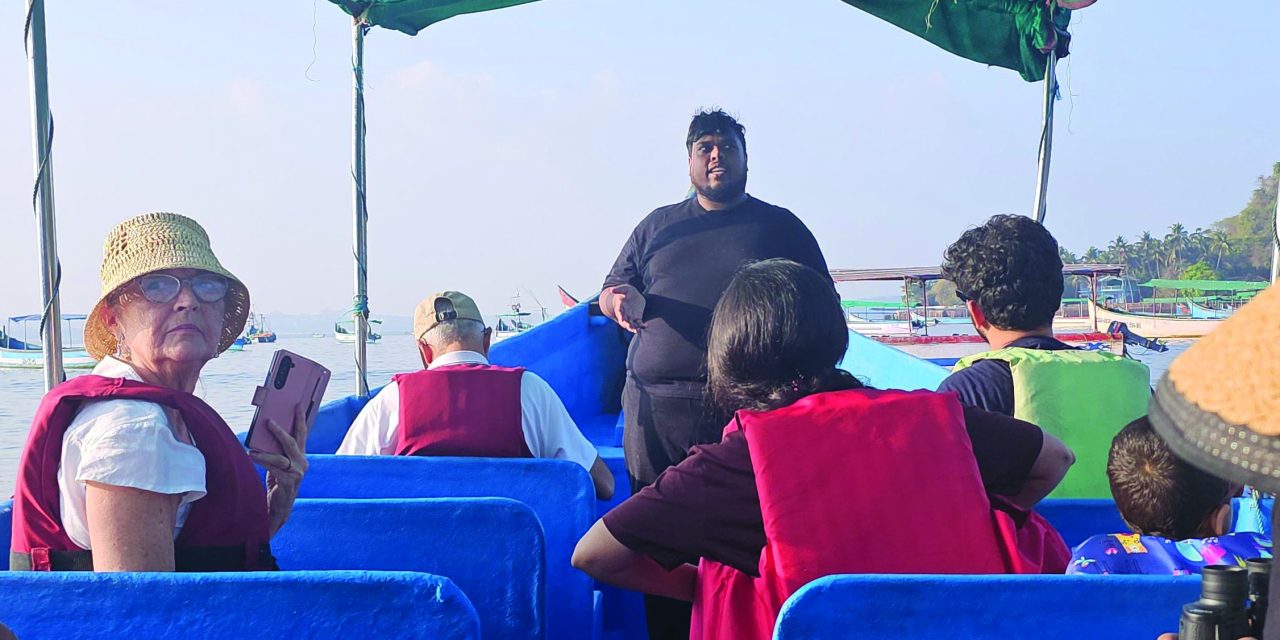
The Marine World Summit on May 17 will include field-based learning, workshops and sessions on marine ecosystems
RAMANDEEP KAUR | NT KURIOCITY
Marine life and coastal systems will be explored at the Marine World Summit, to be held on May 17 from 9 a.m. to 6 p.m. at Dot in the Park, Anjuna.
Curated by Campus Earth, an experiential learning initiative that works with students, the summit will use field observation, art and film to help participants learn about marine ecosystems through direct, hands-on experience.
The summit programme will include sessions on marine ecosystems, intertidal shore walks, conservation discussions, film screenings on marine species and habitats and workshops such as clay modelling, waste-based art and nature journaling. It will also have VR-based learning and interactive displays. There will be participation from students, teachers, scientists, artists and community members to engage with coastal ecosystems through observation, fieldwork and creative activities.
“Community participation plays an important role in coastal conservation, including beach cleanliness, waste management, shoreline care and habitat protection,” explains founder, Campus Earth, Arnob Banerjee on the aim behind this summit. Campus Earth focuses on nature, biodiversity and community-based learning, taking students beyond classrooms via field visits, guided sessions and documentation-based learning.
The event will have Canopy By The Coast as the experiential marine education partner. Speaking ahead of the event, marine biologist and founder of Canopy By The Coast, Nester Fernandes, says marine education is more effective when it is based on direct experience rather than classroom learning alone. “Marine ecosystems are often difficult to understand because much of their activity is hidden underwater. When people spend time in tide pools or observe mangroves and shorelines directly, the connections become clearer,” he says.
He adds that everyday encounters with marine life are used to explain ecological concepts in simple ways. “A crab becomes a way to understand adaptation, a shell helps explain life cycles, a tide pool becomes a functioning ecosystem and a marine sighting leads to discussions on responsible wildlife observation,” he adds.
Fernandes notes that interest in marine environments is rising among students, tourists and coastal communities, particularly around intertidal zones, mangroves and coastal change in Goa but stresses that awareness must be supported with accurate information and continued engagement.
He says that awareness must translate into simple actions such as avoiding plastic waste, not collecting shells, maintaining distance from wildlife, avoiding flash photography near sensitive species like turtles and participating in clean-up drives and citizen science initiatives.
Fernandes lists multiple pressures affecting marine ecosystems, including plastic pollution, ghost nets (abandoned fishing gear), bycatch, unplanned coastal development, sand dune loss, artificial lighting near nesting beaches, habitat degradation, rising sea temperatures, and unsustainable fishing practices. He adds, “These issues are interconnected and gradually weaken coastal systems over time.”
The sessions will include field demonstrations and hands-on activities on intertidal ecosystems, marine biodiversity and conservation awareness.
One of the sessions will focus on marine megafauna and guitarfish, covering species such as dolphins, whales, sea turtles, rays, sharks, guitarfish and sea snakes found along Goa’s coast, along with their ecological roles, behaviour, threats, bycatch and legal protection.
At the summit, Canopy By The Coast will conduct intertidal shore walks, marine nature journaling sessions, biodiversity awareness activities and workshops on marine megafauna and guitarfish, covering species such as dolphins, whales, sea turtles, rays, sharks, guitarfish and sea snakes found along Goa’s coast, along with their ecological roles, behaviour, threats, bycatch and legal protection. Fernandes says guitarfish are among the most threatened and least noticed marine species in the region.
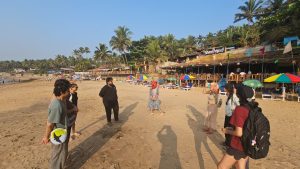
Intertidal shore walks are guided explorations of the zone between high and low tide, where participants observe tide pools, crabs, molluscs, sea anemones, algae, fish, shells and coastal adaptations. The biologist says, “The aim is to help participants understand the shoreline as a living and changing ecosystem rather than a static stretch of beach.”
He also addresses common misconceptions about Goa’s coast, stating that beaches are usually seen in isolation when they are part of a wider system that includes dunes, mangroves, tide pools and estuaries and adds that the coastline supports a wide range of biodiversity, including seabirds, rays, guitarfish, sea snakes, crabs, snails, anemones and sponges, much of which goes unnoticed.
According to Banerjee this is the first edition of a planned six-part summit series, with each edition focusing on a different ecosystem. Registration is mandatory, with separate links provided for workshop participation.
He adds that the long-term goal is to build a platform where educators and practitioners can collaborate to design field-based learning programmes and initiatives.
Programme overview
The day opens with a shoreline walk titled ‘Edge of the Sea’, conducted by Canopy by the Coast from 7 a.m. to 9 a.m. for 15 participants. This will be followed by ‘See. Sketch. Sea’, a journaling session by illustrator and artist, Vaibhav Salgaonkar, where participants record field observations through sketching and writing, scheduled from 10.30 a.m. to 12 p.m.
At the same time, ‘Trash to Treasure’, a tide pool art workshop, will run from 10.30 a.m. to 12 p.m. for 20–30 participants. The session focuses on observing tide pool textures and forms and translating them into artwork using collected and recycled materials. A parallel session titled ‘Why Oceans Matter’, conducted by Jnana Foundation from 11.30 a.m. to 1 p.m., explores human–ocean connections through discussion and real-world examples.
In the afternoon, ‘Waste to Worth’, a workshop led by artist Aishwarya Peters from 2 p.m. to 3.30 p.m. for 15 participants, will explore creative reuse of discarded materials through ocean-inspired art. This will be followed by ‘Mega Fauna and Beyond’, a session by Canopy by the Coast from 3.30 p.m. to 4.15 p.m., which traces marine life from plankton to large animals using field-based examples.
From 4.15 p.m. to 5 p.m., ‘Adopt a Reef’, conducted by Coastal Impact, will focus on coral reef systems, their condition and ongoing restoration efforts. The day concludes with a panel discussion titled ‘Collective Conservation’ from 5 p.m. to 6 p.m., bringing together grassroots experiences, field challenges, and collaborative approaches to marine protection.
Film screenings follow. ‘Kharvan – In Search of the Elusive One (Smooth-coated Otters) & Sand Laddoo (Crabs)’ by Nitya Navelkar looks at Goa’s Khazan ecosystems and the interdependence between species, landscapes and livelihoods through documentary storytelling and animation. ‘Turtle Walker’ follows conservationist Satish Bhaskar’s coastal surveys of sea turtle nesting beaches and the long-term changes impacting them, including the effects of the 2004 tsunami.
An all-day engagement zone will run alongside the programme, featuring coral modelling, clay-based workshops by Lune Clay Pottery, and a pay-as-you-wish VR experience by Jnana Foundation that allows participants to explore underwater environments. The space will also include mural-making and collaborative art activities centred on coastal themes.






Recent Comments